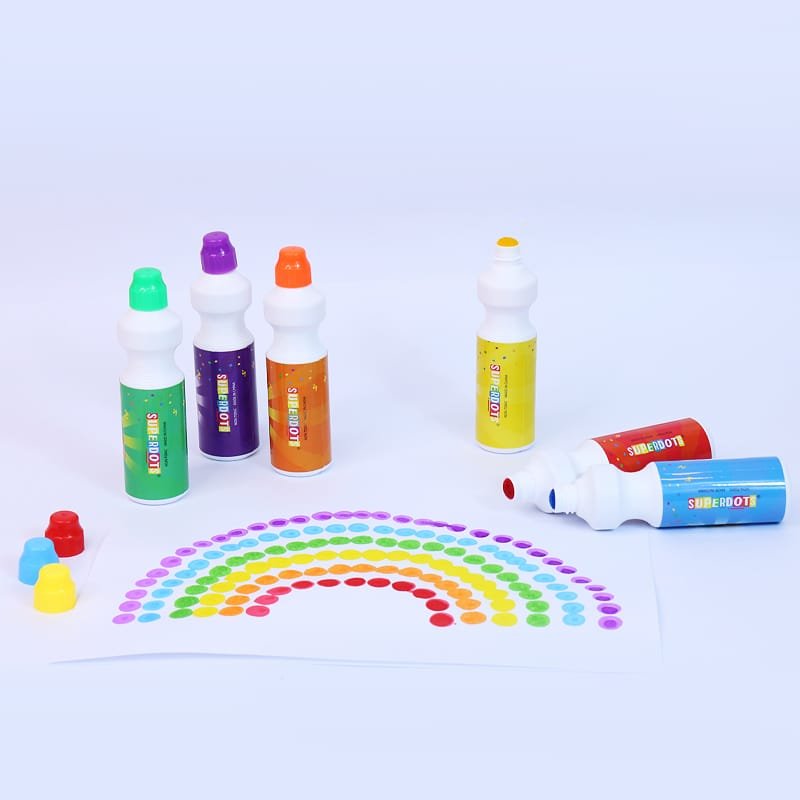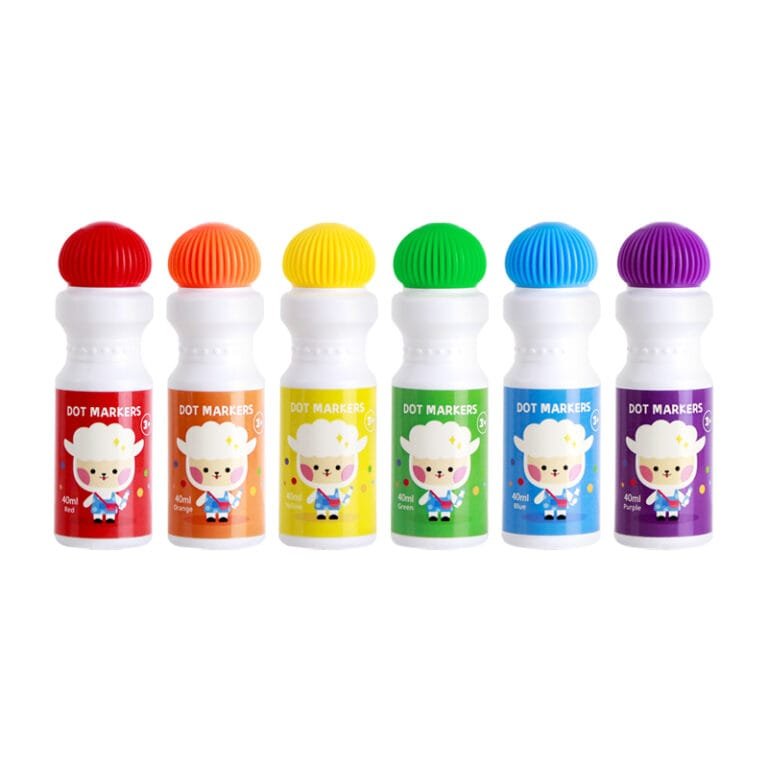
In today’s market, customization has become a crucial method for product differentiation, especially for B2B clients. Customized dot markers not only help build a unique brand identity but also cater to diverse market needs. Whether it’s for educational institutions, wholesalers, or retailers, custom dot markers can provide a competitive edge. However, several key considerations need to be addressed during the customization process to ensure the final product meets your expectations. In this article, we’ll explain the customization process for dot markers and key points to keep in mind when purchasing in bulk.
1. Choosing the Right Customization Process
When customizing dot markers, selecting the appropriate process is essential. Common customization methods include:
- Silkscreen Printing: Ideal for large-scale production, silkscreen printing ensures crisp, vibrant designs, making it suitable for printing simple logos or graphics.
- Heat Transfer Printing: Perfect for more intricate designs, heat transfer printing provides fine detail and is suitable for complex patterns.
- Label Attachment: For smaller batch productions, label attachment offers a cost-effective and flexible solution, ideal for low-volume orders.
Each method has its advantages, and B2B buyers should choose the best customization process based on their production needs, budget, and design requirements.
2. Choosing the Right Materials and Colors
Dot markers typically use water-based ink, so selecting the right color and ink quality is critical for the final product. For B2B clients, the following factors are essential:
- Safety: Ensure the ink complies with international safety standards, especially for products intended for children. EN71 certification (European Toy Safety Standard) is crucial for children’s products.
- Color Selection: When customizing colors, it’s important to ensure color stability over time to prevent fading or staining.
- Material Selection: The material of the marker’s body must meet environmental standards while ensuring comfort and durability. Different manufacturing processes also require specific materials.
3. Customization of Designs and Branding
Design is key to enhancing brand recognition, especially when customizing dot markers. Here are some things to consider:
- Brand Logos: Make sure your logo is clear and visible, appealing to your target market.
- Design Patterns: When designing the artwork, consider the product’s intended use. For B2B clients, dot markers often serve educational institutions or retailers. It’s important to balance eye-catching designs with educational value.
- Functionality: Rather than focusing solely on decorative elements, ensure that the product’s functionality is prioritized. For instance, consider user-friendly designs for the marker tip, ventilation holes, and safety features to guarantee a practical and safe product.
4. Custom Packaging
Customization isn’t just about the product—it extends to packaging as well, which can increase the product’s perceived value. For B2B clients, professional packaging design directly impacts the market response. Common custom packaging options include:
- Gift Box Packaging: Perfect for premium products or seasonal promotions.
- Clear Packaging: Ideal for showcasing the product and allowing customers to view the quality directly.
- Bulk Packaging: For wholesalers or retailers, bulk packaging design is crucial for cost-effectiveness, ensuring the products are easy to transport and store without damage.
5. Production Cycle and Supply Chain Management
Customized products often have longer production cycles, so communication with the supplier is vital. B2B clients should ensure that the production timeline is reasonable to avoid supply chain disruptions. Here’s how to ensure smooth production:
- Plan Production Timelines: Communicate with suppliers to set clear expectations about production times and delivery schedules.
- Ensure Raw Material Availability: Confirm that the selected colors, inks, and other raw materials will be available throughout the production process.
- Inspection and Acceptance: After production, ensure quality checks are carried out to guarantee the products meet your specifications before shipment.
6. Choosing the Right Supplier
Selecting an experienced and professional supplier is crucial. Consider the following criteria when choosing a supplier:
- Production Experience: Choose a supplier with years of experience in manufacturing and offering custom services.
- Client Reviews: Check the supplier’s client feedback and case studies to gauge their reputation in the industry.
- Quality Control: Ensure the supplier has a robust quality control system to guarantee the final products meet your quality standards.
7. Advantages of Customization
Custom dot markers not only help your business stand out in the market but also offer customers a personalized choice. Whether it’s through branded designs, functional improvements, or customized packaging, customized products can increase customer loyalty and market demand.
Conclusion
Custom dot markers offer B2B clients vast opportunities. Through precise production techniques, thoughtful color selections, detailed designs, and packaging solutions, customized products can meet market demands and enhance brand competitiveness. Opting for customization will bring your business more market opportunities and help you solidify your position in the industry.
Superdots, as a professional dot marker factory and supplier, is committed to providing high-quality custom services. Whether you need design work, packaging solutions, or bulk orders, we can tailor our services to meet your specific needs. For more information about customizing dot markers, please contact us.